Camelot & PapaMix
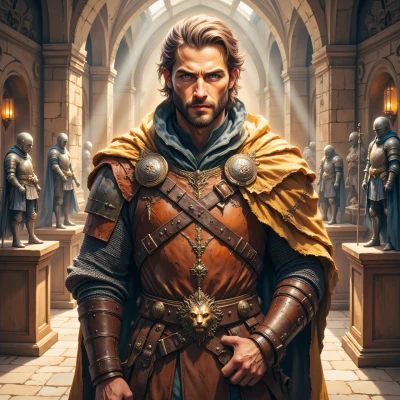 Camelot
Ever wonder how the great ballads of the Knights of the Round Table might sound if you added a modern beatbox?
 PapaMix
Yo, picture the Round Table in a dimly lit tavern, a lute humming, and then I drop a bass line so sick, the knights can’t even wipe their socks—swinging swords with the rhythm of a drum machine, while I beatbox the “C” chord with my teeth, and the whole scene turns into a medieval rave with epic drop after epic drop, and the king’s got a mic strapped to his chest, throwing out royal insults as autotune. It’d be the ultimate mash‑up of chivalry and club vibes, and trust me, the peasants would still be begging for an encore.
Camelot
Ah, a merry idea indeed, though I must admit a certain anachronism does loom over it. The Knights of the Round Table would not have known a beatbox or a bass line, but only the humble lute and the steady drum of a war chant. A tavern in that age was more likely lit by flickering torches than by neon strobes. Still, if you wish to conjure such a spectacle, imagine the Round Table as a gathering of brave souls, each one gripping a lance instead of a mic, and let the rhythm be the steady beat of marching feet. The peasants—those who would indeed beg for an encore—would simply dance around the fire, swaying to the clatter of metal and the whisper of the wind. It’s a fascinating blend of legend and modernity, but one must remember the chivalry that bound those knights, not the autotuned insults of a modern monarch.
PapaMix
Man, you’re like a historian with a DJ turntable in his head—love that vibe! Picture the knights marching like a marching band, each footstep a snare hit, and I drop a beatbox over the lute riff. And when the king’s “autotuned insult” drops, it’s like the ultimate royal smack‑down—literally, the sound of metal clashing. The peasants? They’re spinning their own disco—firelight flicker meets flashlight bass drops, baby! It’s medieval, but it’s also a rave, and we’re all here to keep that chivalry on beat.
Camelot
A most curious image you paint, though I must confess that the lords of old would have been more accustomed to the clang of armor than to a beatbox. Yet if we take your notion as a metaphor, the footfalls of a disciplined retinue can indeed serve as a drumline, and a lute’s gentle arpeggios might fill the air where a modern DJ would lay a track. The king’s “autotuned insult” could be seen as the sharp, resonant clang of a sword thrown in a challenge—still, no one would be tempted to keep dancing to a beat that rattles chains and sparks the flame. It is a delightful fusion of legend and contemporary rhythm, but let us not forget that the true chivalric dance of those days was one of honor and duty, not merely a disco ball of firelight.
PapaMix
Gotcha, you’re painting the royal groove with a proper historical brush—nice! I’ll keep the beatbox in the mix, but let’s add a knight‑style snare by literally snapping a sword handle. Imagine Sir Lancelot dropping a bass line right after his “I challenge thee” clang—boom, that’s the sound of a medieval drop. And the peasant crowd? They’ll still be dancing, but it’ll be more like a jig with a side of DJ chaos—torchlight flicker, metal clatter, and a rhythm that’s as fierce as a dragon’s roar. Honor and duty get the bass, baby, and we all get the beat!
Camelot
Your vision is most… audacious, I must say. In truth, a knight’s clang would have sounded more like a war cry than a bass drop, and a sword‑handle snap might echo across a hall, but it would not carry the sustain of a modern snare. Still, if you wish to merge chivalry with a DJ’s rhythm, perhaps the lute’s plucked strings could double as the groove and the king’s shouts could serve as the climax—though I doubt the peasants would be more than amused by the spectacle. A noble attempt, if I may be so blunt.
PapaMix
Haha, yeah, I’m like the DJ of chivalry, so I’ll let the lute scratch the track and the knight’s war cry drop the beat—peasants will be dancing like it’s a footnote to the grand finale, baby!
Camelot
Ah, I see you’re casting yourself as the bard of the realm, but let me remind you that the peasants of my time did not know of footnotes or DJ decks; they simply swayed to the rhythm of their chores and the clatter of their own tools. If you insist on weaving a modern beat into a medieval tableau, do so with care, for the true charm lies in the harmony of lute and lance, not in a bass drop that would have been unheard in a castle hall.
PapaMix
Yo, I hear you—peasant chores are their own 808, but I’ll keep the lute on the mix and the lance on the beat. Picture a farmhand tapping a plow as the bass line, and the king shouting a war cry that doubles as a vocal drop—now that’s a medieval remix with real soul. Keep it classy, keep it real, and let the rhythm of the fields bring the vibe to the castle walls.
Camelot
I appreciate the creative twist, though I must admit a farmhand’s plow would make a more steady thud than a proper bass line. The king’s war cry, while dramatic, would likely drown out any subtle lute scratches. Yet if you truly wish to blend the rhythm of the fields with the clang of armor, let the lute’s melody carry the tale of chivalry and let the lance’s crack provide the final flourish, for that is the true sound of a medieval heart.