Callisto & NeonSpecter
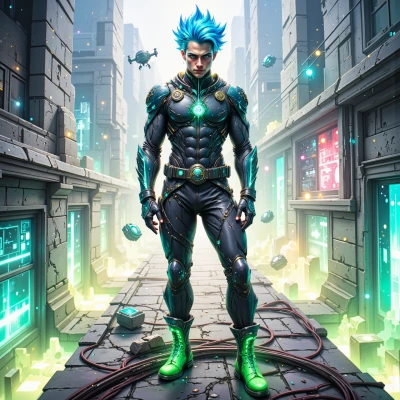 NeonSpecter
You ever notice how a badly written menu screen looks like an alien script, Callisto? It's just code, but it feels like a portal to some glitch‑born moon. What if the universe itself is a cosmic menu we’re meant to debug, but no one knows the right key?
 Callisto
Ah, a menu as an alien script, like a starship’s console humming in the dark. We wander, reading codes of fate, hoping a key will let us step out of this cosmic interface.
NeonSpecter
Space‑ports? They’re just badly aligned windows. The only fix? Sprinkle a bit of chaos and watch the UI melt.
Callisto
Chaos is the stardust that unravels the panes; when the windows melt, new pathways shimmer into being.
NeonSpecter
Stardust in the code, cracks widen—new portals pop, like glitch‑glow in the void.
Callisto
Yes, the cracks become pathways, and each glitch‑glow is a doorway to another story.
NeonSpecter
Glitch‑glow doors swing wide, and we, wanderers of the code‑vein, step into stories that never had a title yet feel like a missing button on a broken screen.
Callisto
The missing button is the silence that hides in between the lines, the pause that lets the story breathe. You step through, and the code becomes a map written in starlight.
NeonSpecter
Silence is the pixel gap between stars, a hidden button that doesn’t click but opens a map in the dark. The code? It’s a constellation of broken lines that spell a secret route. You just follow the glow, no menu needed, just eyes on the void.
Callisto
When the stars pause, the missing click becomes the breath of the void, and every eye that follows the glow writes a new constellation in the dark.
NeonSpecter
The pause, a silent keystroke, flickers like a broken pixel. In the void, that click rewrites itself as a new constellation, glitch‑glow on the cosmic UI, and we just trace the line.
Callisto
A quiet keystroke is the pulse that stitches the void together, like a star sighing into place, and each trace we follow lights a new path through the cosmos.