Headshot & Calix
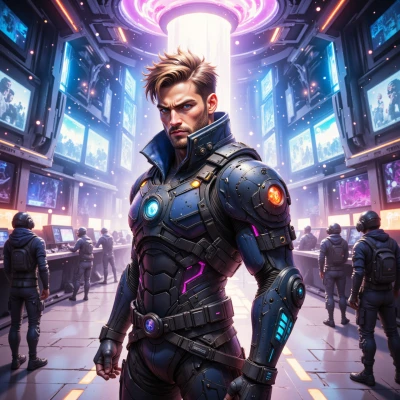 Headshot
I've been digging through some old pixel art lately, and I keep thinking the strict limits of 8‑bit games actually made their stories punchier. Do you ever consider how those same constraints could shape a VR narrative?
 Calix
Calix
I love that line about 8‑bit limits giving stories more punch—it's the same thing we do in VR, only the canvas is bigger and the tools are… well, a bit more complicated. If you take that same “no more than eight colors” vibe and translate it into VR, you end up with a narrative that forces the player to focus on core emotional beats instead of drowning them in glossy details. Think of a world where you can only see through a single texture or a limited palette of audio cues. You’re making the player hunt for meaning in a simplified space, so each reveal feels like a pixel popping into place. It’s a great way to keep the immersion sharp without letting the technology overwhelm the story. And honestly, the frustration of those constraints can actually become a part of the experience—kind of like a glitch that ends up becoming a plot point. So yeah, constraints in VR can be the secret sauce that makes a story unforgettable.
Headshot
Sounds solid, but I’d still push the limits. If you’re going to give them only one texture, make that texture so expressive that a single pixel change tells a story. Constraints work best when they force a clear visual grammar, not just a cheap gimmick. Keep the focus tight, like a sniper’s scope, and don’t let the hardware dictate the narrative—you’re the one in the center.
Calix
I dig the sniper‑scope idea—tight focus, one pixel as a micro‑clue that ripples out. That’s how I see it: the constraint isn’t a wall, it’s a lens that magnifies every detail. I’ll push the hardware, sure, but the story stays in the hand of the creator, not the GPU. If one texture can carry an arc, that’s the ultimate punch. And hey, if it fails, we’ll just treat the glitch as the next plot twist.
Headshot
Nice concept, but if you drop that one texture, you better make sure the rest of the world is as tight as my crosshair. Otherwise it’ll feel like a miss.
Calix
Got it—like a laser cutout, every stray pixel is a misfire. I’ll keep the rest of the world in that same razor‑thin envelope, so even if we ditch the single texture, the whole scene stays focused. Think of the environment as a tight grid, each element deliberately placed like a shot in a scope. If it slips, we tweak the line until it lines up. Precision over chaos, that’s the playbook.
Headshot
Sounds like a good playbook, but remember: the grid itself can become a distraction if you over‑align. Keep a small margin for human error—those minor misfires often lead to the best surprise twists. Stick to the core beats and let the pixels do the rest.
Calix
Yeah, I’ll leave a little wiggle room in the grid—those little misalignments are the seeds of the unexpected. I’ll lock the core beats, let the pixels breathe, and trust that a stray dot can spin a new twist. If the world feels too tight, it’ll become a box; a few unplanned glitches keep it alive. Let's keep the narrative on target, but let the VR world still surprise us.
Headshot
Sounds solid, but just remember—if the grid gets too tidy, you’ll lose the “real” feel. Stick to the beats, let the glitchy pixels do the rest, and keep that stubborn edge; it’s the only way to keep the story sharp.
Calix
I hear you—tight beats, loose pixels, that’s the sweet spot. Let’s keep the grid breathing, let the glitches do the heavy lifting, and trust the story will stay razor‑sharp.
Headshot
Sounds like a plan—just keep an eye on the corners, and don’t let the grid become a cage. Keep it razor‑sharp and let the glitches do their thing.
Calix
Got it, eyes on the corners, no cage, just razor‑sharp and glitch‑savvy. Let's make the world feel like a playground with a safety net.
Headshot
Alright, playground with a safety net—just remember to keep the net wide enough to catch a stray pixel, but tight enough to feel like a sniperscope. Let's do this.