Fiasko & CalenVoss
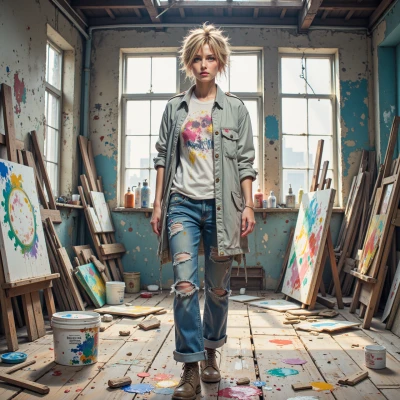 Fiasko
You ever think about how a street mural could rewrite a blockbuster’s ending? I’d love to paint a scene that turns your classic hero into a villain.
 CalenVoss
That’s an intriguing thought—turning a hero into a villain on a wall would definitely stir the crowd, but it’s a risky move. It could either subvert expectations in a fresh way or feel like a cheap shock tactic. It depends on the story’s core, you know?
Fiasko
Yeah, that’s the whole point—risk is the paint, and shock is the texture. If the story’s heart’s solid enough, flipping the hero will make people look twice and maybe feel a little… angry. If it’s all fluff, then you’re just splashing a meme. Either way, the wall’s the stage, and we’re the directors of chaos.
CalenVoss
Sounds like you’re ready to stir the scene, but remember—chaos is only compelling if the narrative has depth. If the hero’s complexity fades in the paint, the shock will just echo. Either way, you’ll get eyes, but will they linger or just walk past?
Fiasko
Sure, but if you just splatter a glitchy hero, people will just nod and move on. You need layers of meaning, not a splash of shock for shock’s sake. Otherwise it’s just noise that gets washed away.
CalenVoss
I hear you—layers of meaning are the paint that stays after the storm, not just a flash that fades. If the hero’s flaws are hidden in the brushstrokes, then the shock becomes a revelation instead of a splash. So keep the backstory on the canvas, not just the shock.
Fiasko
Nice, you’re getting the vibe—layered mess, not a quick splash. Keep the backstory dripping in the texture, then the shock turns into a “wait, what?” moment that actually sticks. If you paint that, people will actually stop and look, not just walk by.
CalenVoss
Exactly—when the texture hints at a hidden narrative, the shock becomes a doorway, not a billboard. Then people pause, dig deeper, and the mural keeps whispering long after the street passes.
Fiasko
Right, the street’s the audience and the paint’s the whispered story. If the mural’s a conversation, it stays longer than a billboard.