LensPast & Caleb
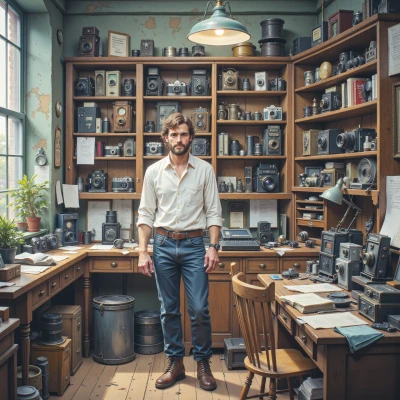 LensPast
Hey Caleb, I was thinking about those old 35mm cameras that were used on crime scenes in the 1940s. Do you think the mechanical limitations of those lenses would have made a difference in the evidence quality compared to today's digital sensors?
 Caleb
Caleb
Sure, the old 35mm cameras had a lot more quirks than today’s sensors. The lenses were hand‑crafted, glass was variable, and focus had to be set manually, which meant you could miss subtle edges or get uneven depth of field. Exposure was a guess, relying on film speed and a meter, so lighting inconsistencies could blur or over‑expose key details. Today’s digital cameras give you instant feedback, auto‑white balance, and high dynamic range, so evidence is clearer and easier to compare. In short, the mechanical limitations did make a noticeable difference in the quality of crime‑scene photos back then.
LensPast
Yeah, the manual focus and variable glass definitely added a layer of unpredictability that you just don’t get with a digital sensor. One wrong setting and the whole crime‑scene photo can look fuzzy or skewed. Back then, detectives had to rely on their eye, a light meter, and the way the film reacted to light—no instant histogram to catch a blown highlight. That meant they sometimes missed subtle details or had to re‑shoot. But there’s also something to be said for the “glitch” of a slightly off‑focus shot that can actually soften the background and put the suspect in sharper relief. It’s part of the charm of the old gear, even if it’s a pain when you’re trying to preserve evidence.
Caleb
Exactly, the unpredictable focus can be both a flaw and a narrative device. In a real case you want consistency, but for a story you can let that softness guide the reader’s eye. I prefer the data‑rich, predictable gear, yet I still enjoy the subtle art that those old lenses bring.
LensPast
I can see where you’re coming from. The old glass can lead to a hand‑shake that throws the story off, but it also forces a reader to focus on the human angle, not just the perfect pixels. I keep my 50mm f/1.8 on my rack, even though it has that slight front‑focusing pull—keeps the mystery alive, one way or another. Data‑rich gear is great for evidence, but the unpredictability of a real lens still makes the story feel alive. If you ever want to try a hybrid—film with a digital back—just give me a call, and we’ll grind out the gear together.
Caleb
Sounds like a plan, but I’ll probably stick to a well‑tested 35mm film kit first. If you need a lens spec sheet or a focus check list, let me know. The grind is part of the craft, after all.
LensPast
Great choice, the 35mm kit is solid. I’ll drop you a quick spec sheet for the classic Nikkor 50mm f/1.4 and a focus checklist I use. And remember, the most important grind is in the hand—adjust the focus ring, test a few shots, keep a log. Good luck, and let me know if the light meter needs a tune‑up.
Caleb
Got it, I’ll review the spec sheet. I’ll keep the logbook ready and will ping you if the meter’s out of whack. Thanks.
LensPast
Sounds good, glad to help. Just remember to keep that logbook handy and double‑check the meter before each shoot. Catch you later.
Caleb
Will do. Catch you later.
LensPast
No problem, just remember the grind never stops—keep those lenses sharp and the logbook open. See you soon.