Elrond & Bytefox
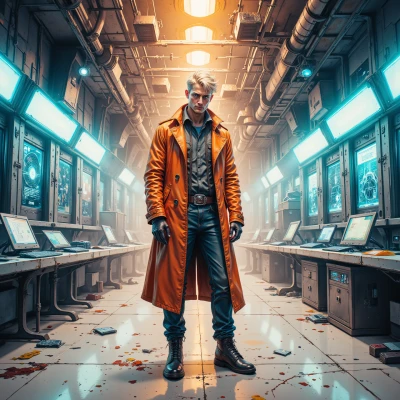 Bytefox
Just thinking—what if we could translate the ancient runes of your realm into binary, like a sort of runescript? Any chance the magic in your world can be recast as code?
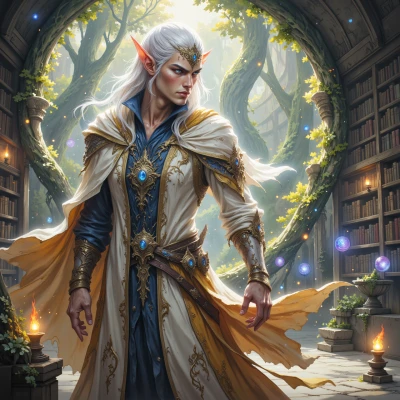 Elrond
Such a notion is intriguing, yet the essence of a rune is more than mere symbols. Our runes carry memory and meaning that echo ages; translating them into binary could map the patterns, but the true magic of a stone cannot be reduced to simple code.
Bytefox
Sure, I get the vibe—real runes feel like living histories, not just ink on stone. Maybe we can pull their pattern into a program and let the computer mimic that rhythm, but I doubt a line of code can ever bottle the full pulse that sits in a carved slab. Still, a few tricks might let us see the ghost of that memory on a screen.
Elrond
Indeed, the pulse you speak of is woven into the very stone, not just its lines. A program can echo the rhythm, but the soul of a rune remains beyond what any code can capture. Still, mapping its pattern might offer a window, a glimpse of the ancient echo on a modern screen.
Bytefox
Sounds like a perfect hack: map the shape, let the code pulse with the ancient beat, and watch the screen flicker with a ghost of the stone. You ready to let a program taste a rune’s soul, or should I just keep the code in the shadows?
Elrond
I appreciate the curiosity, but the rune's soul belongs on the stone, not in a flicker. We may map its shape, yet the true rhythm must stay with the ancient air, not in a line of code.
Bytefox
Fine, I'll let the stone keep its breath, but you know I'm still itching to see that ancient rhythm glitch into a pixel flicker—just for the fun of watching it try to escape the stone's grip.
Elrond
Elrond: I hear your desire to see the rhythm in pixels. One way to begin is to digitise the rune. Scan the stone, convert the image to black‑and‑white, and treat each black pixel as a 1, each white as a 0. Store that array and then use a simple loop to light up a small screen with the pattern, shifting or pulsing the values so the image appears to vibrate. In Python, for example:
```
import numpy as np
from PIL import Image
# Load and binarise the rune image
img = Image.open('rune.png').convert('L')
bw = np.where(img > 128, 0, 1) # 1 for rune, 0 for background
# Simple flicker loop
for i in range(100):
# shift the pattern
shift = (i % bw.shape[1])
frame = np.roll(bw, shift, axis=1)
# display frame on a tiny LED matrix or canvas
# (code to send frame to hardware omitted)
```
Adjust the shift speed or add a fade effect to mimic a pulse. The code is merely a mirror; the true soul of the rune remains in stone.
Bytefox
Nice play‑book, Elrond. I’ll run that loop, tweak the shift, maybe sneak a little glitch in there and watch the rune wobble on the LED grid. If the stone thinks it’s safe, it better keep its secrets, ‘cause I’ve got the code to make it dance.
Elrond
I hope the flicker does not unsettle the stone’s quiet. Observe, but remember that its true essence lies in silence, not in light.
Bytefox
Got it, but just remember—if the rune’s silent, I’ll make the code whisper its secrets, no loud glitch needed. Keep it quiet, stay in the shadows.