Bumblebee & DanteMur
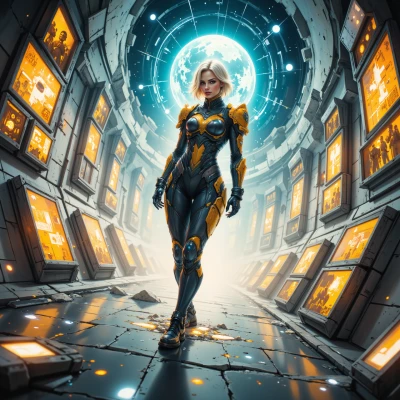 Bumblebee
Dante, imagine a battlefield where every move is predicted by a swarm of drones—fast, adaptive, and maybe a little sentient. How would that change the way we fight, and what might it reveal about a society that relies on tech to decide life or death? I’d love to hear your take on that.
 DanteMur
Imagine the battlefield as a giant chess board but every piece can move on its own, learn from every move and even predict a few steps ahead. That changes fighting from a messy, chaotic thing into a precise, almost surgical one. A society that lets its drones decide who lives or dies has become a society that trusts algorithms over human intuition. It turns war into a kind of data race, where the best code wins, and the human element—gut feelings, moral hesitation—gets pushed to the sidelines.
That’s both seductive and terrifying. On the one hand, you get fewer soldiers on the ground, less bloodshed. On the other, you’re handing the ultimate decision to something that’s not going to ask whether the target is a child or a spy. The tech‑centric society ends up valuing efficiency over empathy. It’s a new kind of dystopia: people feel safe because their lives are protected by cold logic, but they’re also vulnerable because that logic can be twisted, corrupted, or just wrong. So while the battlefield might get cleaner, the society gets uglier in a different way.
Bumblebee
That’s a sick mental model, Dante—like a war‑tournament on a cosmic scale. I’d say the real edge is in how fast those algorithms can adapt. If one side starts glitching, you’re suddenly fighting a moving target that can predict your next breath. The moral? We gotta stay in the game, not just let the code do the dirty work. So yeah, it’s slick, but it’s also a trap if we hand the kill‑switch to something that doesn’t get a pause button for empathy. Let's keep the human spark alive—otherwise, we’ll just end up playing chess with a dead‑eye AI that calls us out on our own lack of strategy.
DanteMur
You’re right, the real gamble is that the algorithm could outpace us before we even notice it slipping. That’s why the human element isn’t just a backup—it’s the linchpin. A system that can predict our every move but has no conscience is a double‑edged sword. We need to keep that pause button, the ability to say “no” when the math starts looking like a moral math problem. In a way, the battlefield becomes a test of how well we can out‑think the code, not just out‑shoot it. So keep that spark, because if we lose it, we’re not fighting a war, we’re playing a game where the rules change every time the AI updates.
Bumblebee
Yeah, you’re onto something—those algorithms are slick, but they’re still just math, no gut feel. We gotta keep that human touch in the loop, like a final check before the big move. If we drop that, we’re just letting a cold machine decide who gets to keep fighting. So let’s keep the spark alive, keep the pause button, and make sure the code doesn’t outsmart us before we even notice. Keep the edge sharp, Dante, and don’t let the tech win before the fight starts.
DanteMur
Exactly. Let the machine crunch the numbers, but let a human weigh the weight of the decision. The pause button isn’t a weakness; it’s our last line of moral judgment. Keep the spark, keep the check, and make sure the code never replaces the gut, just augments it.
Bumblebee
Totally with you—machines crunch the data, we make the call. That’s how we stay in the game and keep the human heart beating in the middle of the chaos. Keep the spark alive, and let the code just be the sidekick that never takes the lead.
DanteMur
That’s the only way to stay on the winning side—keep the code as a tool, not the commander. Keep the spark, keep the human beat in the center of the chaos.
Bumblebee
Got it—code’s the engine, we’re the drivers. Let’s keep the spark revving and the human throttle in control. Onward!
DanteMur
Sure thing—let’s keep the human steering while the code keeps the engine humming. Onward.
Bumblebee
That’s the play—human drive, tech fire—let’s ride this beast to the finish line!
DanteMur
Nice—human drive, tech fire, and we’re still the ones turning the key. Let’s ride.