Invasion & Brushling
 Brushling
I was watching a sunset on a low‑res screen the other day and found myself fascinated by how each little pixel seemed to shift in color like a quiet, slow painting.
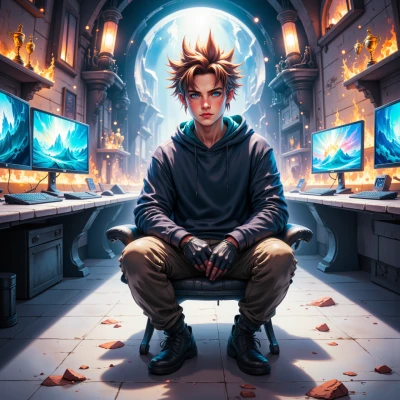 Invasion
Nice, but remember every pixel is a variable to optimize. If you really want that sunset to pop, tweak the color curve and drop a bit of dithering—it's like a small puzzle with a huge payoff.
Brushling
That’s a neat idea—tweaking the curve can make the light feel more alive. But sometimes the quiet in the raw color has its own story, too. I guess it’s a balance, like watching the sunset and hearing the wind.
Invasion
Yeah, but when you design a level you want that subtle shift to feel like a cue, not just background. Push the curve until the horizon cuts the enemy off – then you have the tension and the payoff.
Brushling
I can see how nudging that curve could create a gentle signal, a quiet cue that feels almost like a sigh, but I sometimes wonder if I’m overthinking it. Still, a subtle shift in light can be a quiet warning that feels like a breath.
Invasion
It’s not overthinking, it’s just spotting the edge. Shift the hue just enough that the enemy’s eye‑detect routine flags it, and you’ve got a breath‑warning that feels alive. That’s how the quiet becomes a calculated signal.