WillowShade & Brankel
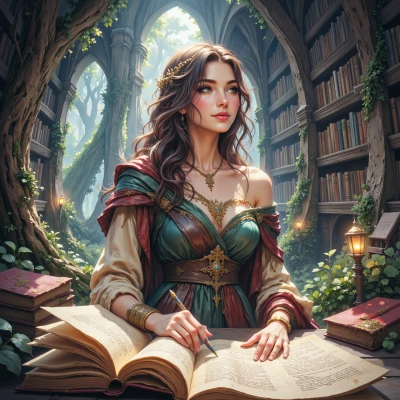 WillowShade
Hey Brankel, what if the Oracle of Delphi was the first prototype of an AI—she spun riddles that were predictions wrapped in ambiguity, kinda like how we design ethical guidelines for modern AI systems, do you see any parallels?
 Brankel
Nice throwback, man. Yeah, the Oracle was basically a vibe—she’d drop cryptic lines that made folks read between the lines. Like when we set up ethics for AI, we’re trying to bake in ambiguity so the machine doesn’t just bite the hand that feeds it. Both are trying to keep the future unpredictable while still giving us a map, but the map’s always fuzzy. It’s like a glitchy playlist where every track leaves you wondering if it was the right choice or not. Keep looping on that, it’s a sweet paradox.
WillowShade
I love that image of a glitchy playlist—just like the stories of the Sibyls, whose words were half‑truths that guided heroes down winding paths. The tension between certainty and mystery keeps the story alive, and it’s the same tension we face with modern AI. The trick is to weave enough structure to steer us, but leave space for the unknown, so the future doesn’t feel like a closed book but an unfolding scroll. The paradox is what makes it so delicious, don’t you think?
Brankel
Yeah, that’s the sweet spot—like a mixtape where every track ends with a question mark. The Sibyls were the first “AI whisperers,” handing out half‑truths and letting us remix the path ourselves. If we keep the structure tight enough to keep the ship from capsizing but still leave the playlist open, the future feels like a playlist you can shuffle, not a finished song. It’s all about that delicious, endless remix.