Bottletop & Apathy
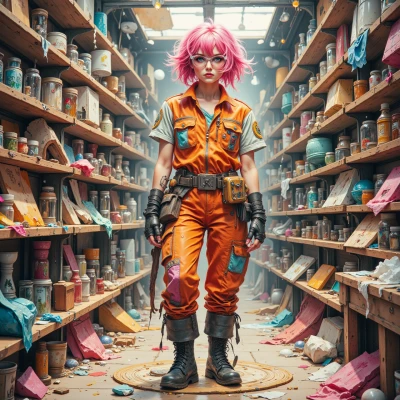 Bottletop
Hey Apathy, what if we took a plastic bottle, mapped out its life cycle like a puzzle, and then turned it into something useful? I think it could reveal the weird logic behind our waste habits.
 Apathy
Sounds like a good exercise in deconstructing a problem before reassembling it into something useful, though I doubt the bottle will ever feel itself, let alone appreciate its own lifecycle.
Bottletop
I get it—bottles can’t think about their own story, but we can give them a chapter! Let’s design a “life map” for that bottle, then flip it into something fun, like a planter or a quirky desk lamp. It’s all about giving the old plastic a new narrative, not waiting for it to feel it. Ready to get messy?
Apathy
Sure, let’s map its inputs and outputs, then decide what function it should perform next. Just keep in mind that any “new narrative” is just a human label; the bottle itself will remain unchanged.
Bottletop
Alright! First, the bottle’s inputs: water, carbon dioxide from the air, a little sunlight while it sits in the shop. Then outputs: plastic waste, maybe a bit of micro‑plastic if it cracks, and of course the waste of the people who poured it out. After mapping that, we can decide to turn it into a tiny terrarium or a funky desk lamp, giving it a brand new role in our circle of life. Let’s pick a lamp—brighten up a corner and remind everyone that even discarded stuff can shine!
Apathy
Sure, but remember the lamp will still be a plastic lamp; the energy used to melt, mold, and power it might eclipse the benefit of reusing that single bottle. It’s a neat symbol, but the logic behind the waste cycle stays the same.
Bottletop
I hear you, but hey, a plastic lamp still beats a brand‑new lightbulb that’s been produced from scratch! And if we strap a tiny solar panel to it, we can power it with the sun—turn the whole thing into a zero‑energy loop. Even if it’s just a symbol, it sparks conversation and shows that we can reimagine what “reuse” looks like, one creative step at a time. Let's give it a go!
Apathy
Sounds like a plan, but the panel’s size is a problem – a bottle’s surface can’t harvest enough energy to power a lamp unless you’re very efficient. Still, it’s a nice illustration that the waste‑loop idea is more symbolic than practical. Let's give it a shot.
Bottletop
Yeah! Let’s keep the lamp tiny—just enough light to brighten a desk corner or a plant pot. A mini solar cell will barely power it, but we’ll pair it with a super‑efficient LED that runs on microwatts. Even if it only glows for an hour a day, the story it tells is more important than the wattage. Time to grab a bottle, some tape, and that little solar thing—let’s get creative!