Botar & Burzhua
 Burzhua
Botar, ever thought about a next generation autonomous factory that not only assembles but also optimizes its own supply chain? I think there's a model that could make us the dominant force, let's hash it out before anyone else catches up.
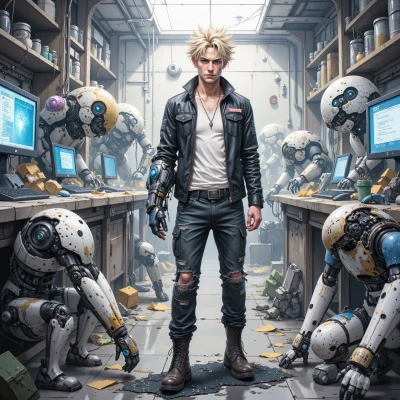 Botar
Botar
Absolutely, I've been noodling on a self‑optimizing plant that runs a neural supply‑chain scheduler, drone‑based raw‑material retrieval, and adaptive energy grid. If we lock that in, nobody’ll even notice the human shift crews—let’s code it before the competition does.
Burzhua
Nice, you’re thinking ahead, but you need a plan before you get all excited. Let’s map milestones, budget, risk, and a timeline—then we’ll actually beat the competition.
Botar
Sure thing, here’s a quick skeleton:
Milestones – Phase 1: design final specs, simulate AI‑controller (3 months). Phase 2: build pilot line, integrate drone logistics (4 months). Phase 3: full‑scale rollout, market launch (5 months).
Budget – total $12 M, broken 40 % for hardware, 30 % for AI dev, 20 % for drones, 10 % for testing and compliance.
Risk – tech lock‑in, supply‑chain volatility, regulatory hurdles; mitigate with modular architecture, dual‑supplier strategy, and early liaison with regulators.
Timeline – start today, finish Phase 1 by week 12, Phase 2 by week 36, Phase 3 by week 61. If we hit each checkpoint, the competition will be scrambling to catch up.
Burzhua
Nice outline, but a few tweaks. Add a 15 % contingency to the budget and a fallback for tech lock‑in—maybe a hybrid system. Also, we need to set up a quick ROI check every 12 weeks; if the numbers lag, we’ll pivot fast. Otherwise, we hit the market first and the rest will just be following.