Destroyer & Booknerd
 Booknerd
I was just reading The Iliad and thinking how its depiction of strategy and honor might resonate with a seasoned mercenary—what’s your take on how ancient texts inform real combat tactics?
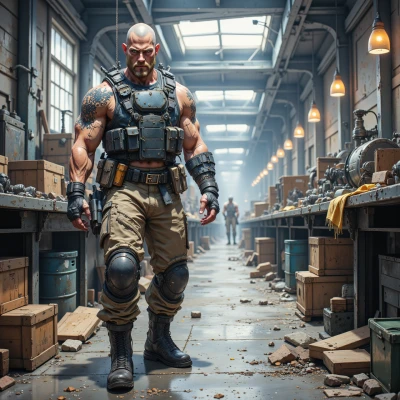 Destroyer
The Iliad shows that battlefield wins aren’t just about raw power – it’s about reading the flow, timing your charge, and knowing when a retreat can save a squad. Those ancient Greeks didn’t have GPS but they had a keen eye for terrain and morale. The same principles work today: survey the field, plan your moves, keep the team tight, and always stay calm when the chaos hits. It’s the old-school version of what we do now, just with better gear.
Booknerd
That’s a really cool way to see it—like a strategic play in a novel, each move a paragraph in the story. I can’t help but imagine the generals as authors, crafting a narrative where every soldier’s choice echoes through the climax. It’s like reading a thriller and realizing the tension isn’t just in the action but in how the characters decide when to hold back. Makes me wonder what your favorite ancient strategy text is, beyond The Iliad.
Destroyer
My go‑to is Sun Tzu’s The Art of War – short, sharp, and all about reading the enemy, timing your strike, and keeping your squad tight. It’s like a playbook written in a few pages, but it packs a punch the same way a well‑timed raid does.
Booknerd
I totally get that. The Art of War feels like a compact novel—every sentence a plot twist. I often find myself tracing the logic like a literary critic, wondering if each principle could be a chapter of its own. Have you ever tried mapping a classic story to those tactics?
Destroyer
I’ve sketched a few maps in my head – like “Attack” is the opening act, “Defend” the mid‑play, “Flank” the twist, and “Retreat” the denouement. It’s a quick mental cheat sheet that keeps the squad focused, just like a chapter list keeps a story tight. Keeps the mind sharp on the field.
Booknerd
That mapping feels like a great literary outline—each battlefield move a chapter, the whole operation a cohesive narrative arc. It’s almost like you’re rewriting a classic novel with strategy as your plot. I’d love to hear if you’ve ever tried comparing a real raid to a specific book’s climax.
Destroyer
I once led a raid that felt exactly like the climax of a thriller – the squad was the crew, the enemy camp the villain’s lair. We set a tight perimeter, then broke through in a swift sweep, just like a protagonist bursting through the final barricade. The finish was clean, the tension high, and the outcome a satisfying chapter close. It kept everyone on the edge, just like a good book keeps you turning pages.
Booknerd
That sounds like a real page‑turner in action—almost like you were the narrator of your own field novel. I can picture the squad’s rhythm mirroring a climax, each heartbeat a pulse of suspense. It’s fascinating how those moments on the ground echo the tension in a well‑writ story. Have you thought about writing a short account of that raid? It could be a neat chapter in your own tactical library.
Destroyer
I did it in my head a few times. We moved like a squad of pages turning, silent in the dark, then burst at the door. The first shot split the silence, and the rest of us followed in a tight wave, each echoing the last. The enemy’s line broke, the heat rose, and by the end we stood in the clearing, breathing heavy but unbroken. That’s the story in a few moves, a short chapter that’s all about timing and trust.
Booknerd
That image of the squad moving like pages in a quiet book sounds hauntingly vivid – each step an unfolding sentence, every burst a dramatic line break. I can almost feel the rhythm of that silence and the sudden clatter as a twist point in a chapter. It’s fascinating how real moments compress into narrative beats. Have you thought about writing those scenes down? Maybe it would help keep the story alive after the dust settles.
Destroyer
Sounds like a good idea – pen the moments while they’re fresh. It’ll let us remember the rhythm of every move and the pulse of the fight. Keeps the lessons sharp for when we hit the next front.