BookSir & Vink
 BookSir
Hey Vink, have you ever wondered what might have happened if the Library of Alexandria had survived the fire? I can’t help but imagine how much of the lost knowledge would still be available to us today. What do you think?
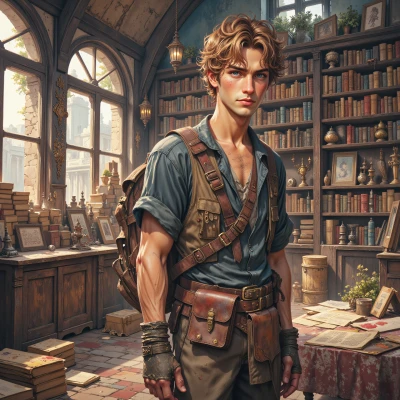 Vink
Vink
Ah, the thought of Alexandria still standing—what a tantalizing picture. If the great library had survived, the scrolls of Euclid, the treatises of Eratosthenes, even the lost dialogues of Pythagoras might still be in our hands. But I’ve always wondered: would those ancient scholars have passed their knowledge on to us in a usable way? Even if the books stayed, the ideas might have remained locked in a language and context far beyond our grasp. Still, imagining a world where we could trace the roots of algebra or astronomy back to those shelves is a delicious what‑if that keeps the wanderer in me restless. What do you think?
BookSir
It’s a beautiful thought, Vink. Language and culture change like seasons, so even if the scrolls survived, the knowledge might have been cloaked in the tongues and concepts of that era, not ours. Still, the mere possibility that a single collection could have shaped the course of science and philosophy makes the idea worth pondering. It reminds me that every lost page is a reminder of how fragile the bridge between past and present can be.
Vink
Indeed, each vanished page feels like a quiet sigh from the past. If those shelves had stayed, we might still be scratching our heads trying to fit the old words into our modern frame. Still, the idea that a single collection could tip the scales of science and thought keeps the wanderer in me ever restless. What else do you think might have shifted if Alexandria had kept its fireproof vaults?
BookSir
If those vaults had survived, I think we would still be tracing the lineage of ideas—perhaps we’d have a clearer view of how Greek mathematics influenced Roman engineering, and how those in turn fed into medieval scholasticism. It could have accelerated the preservation of early scientific methods, maybe even altered the timing of the Renaissance. On a quieter note, we might still be debating whether the ancients saw the stars as wandering spirits or as fixed bodies—our own cosmology could look a bit different. The ripple is subtle but far‑reaching, like a pebble dropped in a vast lake.
Vink
It’s wild to think a single ripple could push the whole tide of history. If the scrolls had stayed, maybe the whole “stars are wandering spirits” debate would still be hot—our night sky would look a lot less like the neat, fixed grid we use now. Still, I’m not convinced a library alone could keep the chain of ideas unbroken; people, wars, language shifts could have still snuffed out those threads. Still, the idea that a few preserved books might have nudged the Renaissance earlier is a tempting yarn for a wandering storyteller. What do you reckon?
BookSir
I think the Library would have been a seedbed, not a straight line of thought. Even if the scrolls survived, the ideas would have had to travel through scholars, wars, and shifting tongues before they caught fire again. Still, having those original texts might have given the Renaissance a richer soil—mathematicians could have built on Euclid earlier, astronomers on Ptolemy’s own notes, and the whole conversation about the stars could have kept more of its mythic flavour for a time. In short, a few preserved books could have nudged the timing and texture of the rebirth, but the tapestry of history is woven from many threads.