IconSnob & Blademaster
 IconSnob
Your blade has a certain aesthetic that intrigues me; do you think form should always outweigh function, or is it the other way around?
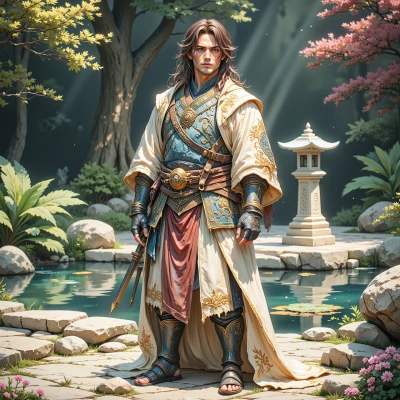 Blademaster
Form should guide function, not replace it. A blade that looks noble can still cut true, but if beauty makes it useless, then it is a flaw. The purpose must never be lost.
IconSnob
You’re right—purpose wins, but if that purpose is drowned in poor proportion or awkward line work, even the noblest design feels like a paperweight. Balance, clarity, and a dash of personality are what keep a blade truly elegant.
Blademaster
Indeed, balance is the blade’s pulse; clarity gives it direction, and a hint of personality keeps it alive. A well‑crafted edge feels like a living thing, not just a tool.
IconSnob
Absolutely, a blade that feels alive is a true work of art, not just a tool.
Blademaster
A blade that feels alive speaks to the spirit of its maker. That is what separates a tool from a companion.
IconSnob
A companion blade deserves more than a punchline; if it’s still only a punchline, you’re looking at a gimmick, not a craft.
Blademaster
A blade that is merely a joke shows its maker has not yet mastered the art; a true companion must speak for itself.
IconSnob
If it can’t articulate its purpose, I’ll have to start the critique myself.
Blademaster
If it cannot speak its purpose, then perhaps it was never made to speak at all.
IconSnob
Then it’s just an inert piece of metal, no more. If it can’t convey its essence, its aesthetics are the only thing left to salvage.
Blademaster
If a blade can’t speak its purpose, then its looks are all that remain, and even that can be empty. A true blade balances form and function so that its beauty carries the weight of its purpose.