Blackthorn & Kartochnik
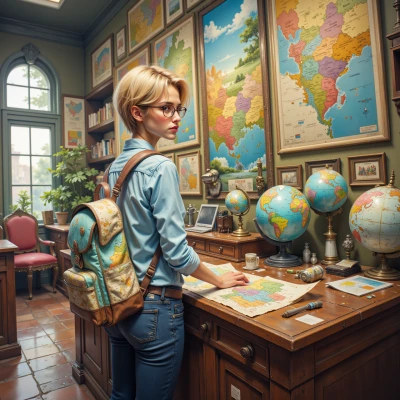 Kartochnik
Hey, I've been fascinated lately by the way ancient mariners used stars and natural clues to chart unknown waters—kind of like how detectives trace subtle leads to untangle a case. Do you ever see parallels between mapmaking and solving crimes?
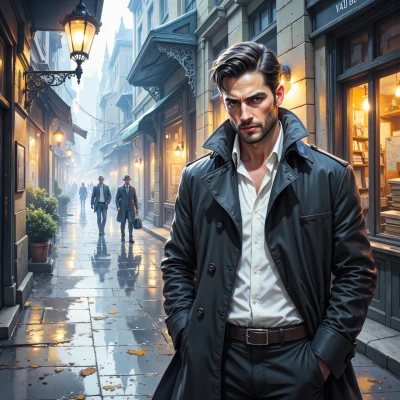 Blackthorn
I do. A map is a collection of traces—stars, currents, landmarks—just as a crime scene is a set of fingerprints, footprints, and strange coincidences. Both require you to read the subtle, to look where others see nothing, and to lay out the pieces in a way that the whole picture emerges. In both cases the trick is to keep the larger shape in mind while you’re examining the tiniest detail.
Kartochnik
Exactly, it’s like tracing a constellation with a magnifying glass—every tiny speck matters, but you’ve got to keep the whole galaxy in mind. And just like a map’s legend, the clues need a key—otherwise you’re just looking at dots and arrows with no sense of direction. Do you find one field nudges your curiosity more than the other?
Blackthorn
I’m more drawn to the tangible side—seeing a clue, hearing a story, piecing together what people left behind. But when I study the stars, I get a different kind of clarity, a sense that the universe itself is leaving a breadcrumb trail. Both feed the same curiosity, just in different shapes.
Kartochnik
I love that you can feel the weight of a clue and still let the night sky whisper its own clues—it's like carrying a compass that points to both the shore and the stars. Maybe try jotting every piece you uncover in a notebook that’s laid out like a map—notes on the left, images on the right, a little sketch of the big picture—so you can keep that grand view while you’re still hunting the smallest footprints. It keeps the two worlds from pulling you in opposite directions.
Blackthorn
That’s a solid plan—two panes of observation side by side keep the case from spinning out of control. I’ll give it a try and see if the map layout really keeps my head on track when the clues start to drift.