Baboon & CrystalForge
 Baboon
Ever wondered if the old stone tools of the river people could outlast a laser‑cut alloy? I’ve been mapping the canyon and thinking about turning that into something stronger. Got any material tricks?
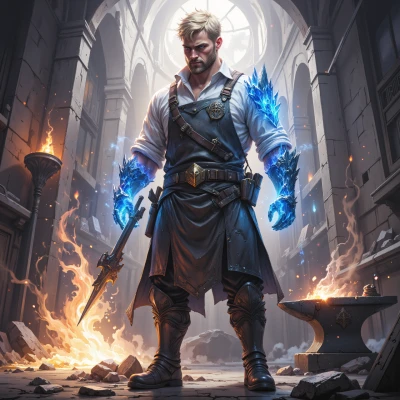 CrystalForge
Hmm, the stone’s durability comes from its natural hardness and fracture resistance, but it lacks toughness. If you want a hybrid, start with a high‑strength alloy—maybe a Ti‑6Al‑4V—and coat it with a silica‑rich ceramic glaze. That mimics the stone’s surface toughness while giving the alloy the strength you need. Then, consider a low‑temperature, high‑pressure forging step; it aligns the grains and reduces internal stresses, so the final piece will be both hard and tough. Just keep the process controlled, or you’ll end up with brittle cracks that even the best coating can’t hide.
Baboon
Sounds solid—just watch that pressure step, or you’ll get a piece that cracks like a bad banana peel. I’ll grab a titanium sample, give it a ceramic coat, and test it under a mock river rush. If it holds, we’ll have a new tool that could outlast a jungle king. Thanks for the blueprint!
CrystalForge
Good luck—keep the pressures steady and the cooling uniform. If it survives the mock rush, you’ll have a tool that’s both tough and elegant. Let me know how it turns out.
Baboon
Will do—watch out for the surprise melt‑back. If it survives the rush, I’ll brag about having the toughest tool in the valley. Will ping you once the test ends.
CrystalForge
Sounds like a plan—just remember the quench rate, or you’ll end up with a cracked alloy. Keep me posted.
Baboon
Got it—quench rate on my radar, no surprise cracks. I’ll drop you a line when the test is done.
CrystalForge
Sure thing—just keep the quench rate in check so you don’t end up with a brittle surprise. Looking forward to hearing how it holds up.