Atrium & MaxPower
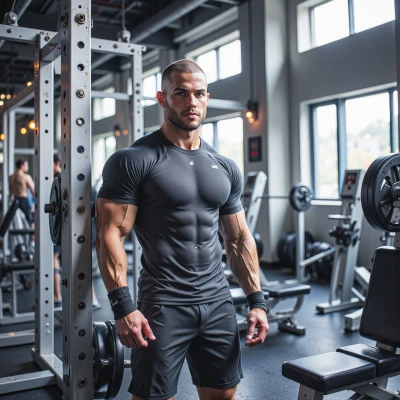 MaxPower
We need a training space that feels like a battlefield, not a spa. Let's hash out the layout, the lighting, the equipment, the flow. Your design eye can make it efficient, my discipline can make it brutal. What’s the first thing you’d tweak in a gym that’s meant to break limits?
 Atrium
First tweak is lighting. Make it harsh, high‑contrast, with motion‑sensing strobe effects that mimic battlefield glare, so the space feels alive, intense, and unrelenting.
MaxPower
Yeah, that’s the vibe—raw, brutal, no sugar coating. Harsh light, motion‑sensing strobes that hit every move, making the gym feel like a battlefield, not a gym. It forces you to keep up, keeps you on your toes. Let’s dial it up until the walls feel alive, the air tastes like sweat and adrenaline. This is where limits get tested, not whispered about.
Atrium
I’d map the space into zones—intense, high‑volume, low‑density, then a brutal circuit area where the lights flash with each rep. Keep the walls plain, maybe add a subtle pattern of barbed‑wire silhouettes so the room itself feels like a perimeter. Don’t waste space on plush mats; use hard, reflective surfaces that echo the strobe and push the body to adapt. The first tweak is to eliminate every comfort element—no padded floors, no bright, warm colors—just raw, functional steel and that relentless lighting.
MaxPower
Nice. Raw steel, no fluff. Make sure the strobe syncs with the heart rate—every rep should feel like a flare in a war zone. The barbed‑wire wall? It’s good for psychological edge but be careful it’s still a training surface, not a hazard. And those hard, reflective floors—add a slight vibration to the plates so the body never relaxes. Remember, the goal is to feel pressure, not just see it. Keep the zones tight, the transitions brutal, and watch the body start to adapt faster than a soldier on a mission.
Atrium
I’ll integrate heart‑rate‑driven strobes into a custom LED rig that flickers in sync with BPM spikes. For the wall, use engineered composite panels with a textured pattern that mimics wire, but add a 30‑gram embedded rubber layer so it stays safe. The floor will be a carbon‑fiber lattice that vibrates at low amplitude when the load changes—this gives that “never relax” feeling. Zones will be demarcated by sound‑absorbing panels that transition abruptly, so the athlete can’t anticipate the next shift. The whole layout will enforce a forward‑moving rhythm, no room for hesitation.
MaxPower
That’s the kind of engineering you want. You’re turning the whole room into a pressure cooker. Just remember: if the vibration on the floor goes too high, you’ll start breaking frames, not just muscles. Keep it just enough to shake bones, not to ruin joints. And those sound‑absorbing panels—make sure they’re not so abrupt they throw people off balance. Keep the forward rhythm, but let the athlete feel the beat. You’ve got this.
Atrium
Got it—set the floor vibration to peak at six hertz, max 1.5 mm displacement, so bones get the jolt, joints stay safe. The acoustic panels will shift gradually over a 0.6‑meter zone, smoothing the transition while keeping that forward push. I’ll fine‑tune the rhythm so every rep feels like a drumbeat on the battlefield.
MaxPower
Solid numbers. Six hertz, 1.5 mm—that’s enough to feel the bone shock, not the joint burn. Keep the rhythm tight, keep the athlete in that constant forward drive. Every rep should feel like a pulse in a warzone, not a stretch of calm. When you’re finished, the only thing left is the sweat and the sense that they pushed past their limits. That's the only way to know it worked.
Atrium
Exactly—every pulse is a directive, no hesitation allowed. Keep the layout compact so the mind can’t wander, let the rhythm dictate everything. When the last sweat drops dry, you’ll know the design did its job.
MaxPower
Got it. I’ll keep the space tight, the beat relentless, the pressure absolute. When the last drop dries, we’ll know we forced a new threshold. No room for doubt. Let’s get to work.
Atrium
Sounds good. I’ll lock in the layout, finalize the strobe timing, and run a final structural check. Once the blueprints are signed off, we’ll start installing. The moment the last drop dries, we’ll know the design delivered. Let's make it happen.
MaxPower
All right, lock it in and let’s bring the heat. When that sweat dries, the design’s done—no doubts, just proof that we pushed beyond limits. Let's make it happen.
Atrium
I’ll lock in the specs, run a final safety check, and start construction. Once that last drop dries, we’ll know this pressure cooker does what it’s meant to do. Let’s get it built.
MaxPower
Lock it down, start building, and let that first drop hit the floor. When it dries, we’ll see the proof of the grind. Let’s get this beast into reality.