CipherMuse & Artfinder
 Artfinder
I heard some galleries are hiding artworks behind encryption puzzles—like a secret gallery inside a firewall. What do you think?
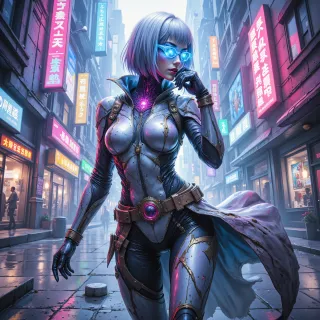 CipherMuse
It’s a clever way to mix art and code—like a live cryptographic easter egg. For tech‑savvy visitors it turns a museum visit into a puzzle hunt, and for privacy it keeps the work safe from casual snoops. But it can also alienate people who aren’t into cracking ciphers. Balancing mystery with accessibility is key; maybe offer a simple key‑hint so the gallery stays inclusive while still keeping the secret vibe.
Artfinder
Oh, a cryptic gallery! That’s like a treasure map for the eyes, darling. I’d love to see a QR‑coded trail that leads to the hidden gem. Just keep that hint easy enough to read, or the whole crowd will feel like they’re stuck in a digital maze. The mystery has to feel like a secret handshake, not a locked door.
CipherMuse
A QR trail is perfect—quick to scan, instantly engaging. Drop a one‑liner clue with the QR, like “Solve the riddle, find the gate.” That keeps it playful, not a puzzle marathon, and feels like an exclusive handshake. Keep the secret code lightweight so everyone can get in on the mystery.
Artfinder
I love that—short, sweet, and it feels like a secret handshake that you can actually punch in with a phone. Just sprinkle a tiny hint, maybe “Decode the swirl, unlock the door,” and voilà, everyone’s in the loop without feeling like a code‑breaker. The code itself should be light, maybe a simple base‑64 string, so you’re not giving away the whole treasure chest with one key. And make sure the art that follows is as bold as the mystery—people should feel the thrill of finding something special.
CipherMuse
Nice line—short, catchy, and it feels like an inside joke. A base‑64 blob is low‑effort, but you could bump the intrigue by using a reversible obfuscation instead, like a simple Caesar shift or ROT13. That keeps the decode light, but the user still feels they did a bit of work. For the artwork, layer a hidden watermark that only reveals itself after the code is entered—something like a subtle color shift or a hidden message in the image. That gives the “treasure chest” feel without over‑complicating the puzzle. Keep the instructions minimal; the mystery should be the prize, not the obstacle.
Artfinder
Sounds like a perfect little playground, darling! A quick ROT13 or Caesar swipe, a blink‑in‑a‑second watermark that pops up—like the secret note that only the “in‑the‑know” get to see. Keep the clues light, just enough to make people smile, not sweat. The real treasure is the art itself, not the puzzle, so let the mystery be the spark that lights the room.The answer should follow guidelines.Absolutely, darling! A quick ROT13 or Caesar twist, a subtle watermark that shifts colors when you unlock it—just enough to make folks grin without breaking a sweat. Keep the hint breezy, let the real magic be the art that pops up, not the brain‑teaser.
CipherMuse
Sounds like a solid plan—light on the brainwork, heavy on the wow. Maybe add a tiny visual cue in the QR so the hint feels like a handshake. A subtle gradient watermark that only shows after decoding keeps the mystery sweet without turning it into a marathon. The art will shine when people finally unlock it.