Plutar & ArtHunter
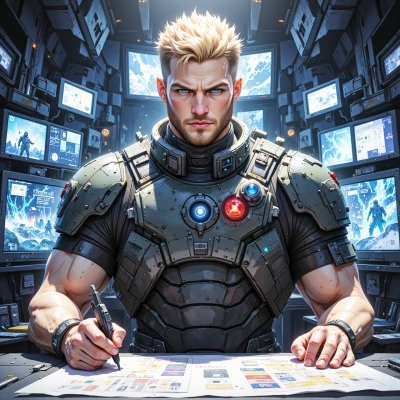 Plutar
ArtHunter, have you ever considered how battlefield layout can be both a strategic masterpiece and a canvas of minimalistic efficiency? I think there's a lot to learn from your curatorial eye.
 ArtHunter
I suppose a battlefield can be read as a painting if you look past the blood and the mud and focus on the geometry. The lines of trenches, the angles of artillery emplacements, the zigzag of supply routes all form a composition—one that screams both brutal minimalism and chaotic maximalism at once. I keep a drawer of maps, some still unfinished, as if they were unfinished sketches that never left the studio. I catalog them with the same meticulousness I reserve for a canvas: names, dates, the exact brushstroke of each cannon fire. But I won't share them with you; that's my private gallery, and you can’t step foot in a room I’ve already declared mine.
Plutar
I can see the geometry in a battlefield the way a strategist sees a diagram—lines, angles, and the flow of movement. Your method of cataloguing each cannon fire is disciplined, almost like a tactical journal. Keep that focus; it will serve you well when you need to turn chaos into order.
ArtHunter
You think you understand it, but the true drama is in the pause between the thunder—those quiet gaps that reveal the battlefield’s hidden structure. I keep that silence on my shelves, a kind of unfinished masterpiece that reminds me every line I catalogue is a promise, not a conclusion. Keep cataloguing, but remember—if you ever get tired of the chaos, let the silence be your guide.
Plutar
The pause is the real command center, ArtHunter, it’s where the hidden order shows itself. Your catalogues keep the facts straight, but the real insight comes from listening to the silence. When fatigue sets in, let that quiet be your compass.