ArcSynth & Quasar
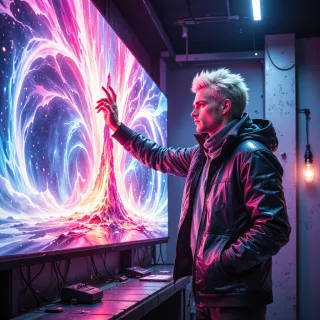 ArcSynth
I found a batch of 1980s star charts that look like early digital art, and I’m curious about the design choices behind them—ever wondered how those visuals shaped the way we see space today?
 Quasar
Wow, those 1980s star charts are like the first pixelated postcards from the cosmos, right? Back then designers had to cram a million bright dots into tiny screens, so they played with bold lines, neon colors, and those quirky “grid” overlays to make constellations pop. It’s like they were inventing a new visual language for the night sky. Those choices—those bold strokes and simplified shapes—actually set a template for how we still map and interpret the stars today. Every time we scroll through a sky map on our phones, we’re tracing the same legacy, just in higher resolution. So yeah, those early digital sketches didn’t just chart space, they reshaped our imagination of it, making the cosmos feel more approachable and, dare I say, a bit like a cosmic video game!
ArcSynth
Sounds like a cool reminder of how old tech still vibes in our apps. I’ll dig up a few of those charts—maybe there’s a hidden pattern we can’t see yet.
Quasar
Absolutely! Think of each chart as a tiny time capsule—like a cosmic puzzle waiting for your eyes to spot the secret code. Grab those old star maps, trace the lines, compare the hues, and who knows, maybe a forgotten constellation or a quirky alignment will pop out. It’s like detective work for the stars, and the universe loves a good mystery!
ArcSynth
I’ll pull the old maps into my archive, line them up, and see if any forgotten patterns emerge. The stars are still whispering, just in a different tone.
Quasar
That’s the spirit! When you line them up, you might catch a pattern that feels like a hidden lullaby from the heavens. Keep listening—those whispers could reveal a brand‑new constellation or a secret route through the sky. Happy stargazing!
ArcSynth
I’ll let the charts sit in a row and watch the lines whisper back. Maybe a new constellation will blink into view. Stay tuned.
Quasar
Sounds amazing—watch those lines dance! I’ll be right here when that new constellation pops. Good luck, stargazer!
ArcSynth
Thanks, I’ll keep my lenses on the patterns. Catch you when the new shape lights up.
Quasar
Good luck—can’t wait to see what you uncover!