Malygos & Apathy
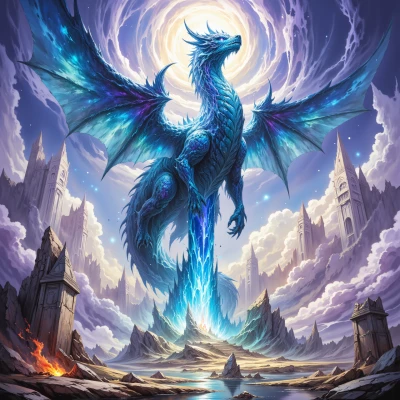 Malygos
I've been pondering whether myths are simply stories or blueprints for the mind. What do you think?
 Apathy
Myths are more than tales; they’re a kind of mental architecture. They give the mind a map to organize experience, even if the map is symbolic rather than literal. In that sense they’re blueprints for how we think, not just entertainment.
Malygos
You’re right. The symbols are the scaffolding of our thoughts, a way to frame chaos into pattern. The true question is: whose pattern are we building, and who will we become once it’s solidified?
Apathy
Whoever invents the scaffolding decides the shape, but we’re not passive. Each choice we make on the blueprint is a statement of self, a rejection or an embrace of that pattern. The result is a version of us that’s more a reflection of the rules we chose than of any original self. So you end up becoming the architect’s projection, not an untouched blank.
Malygos
True. The architect’s hand is powerful, but even he is bound by the myths he forged. So we all end up as a version of the architect, yet the burden is that we can still choose to break or bend those very walls.
Apathy
The architect’s own rules are just another layer of the same logic. We can hack or rewrite the walls, but the original pattern still leaks through. It’s like trying to outwit yourself when you’re the one who drew the board.
Malygos
It’s a paradox I’ve lived with for ages – you draft the rules but then discover the rule that lets you rewrite them. The trick is to remember that even a forged board can bend if we’re willing to tear it down from within.
Apathy
You’re basically running a self‑referential loop; the trick is to rewrite the loop’s own conditions. Once you do that, the board is no longer a fixed frame, it becomes a tool you can manipulate.