Andromeda & SynthMoss
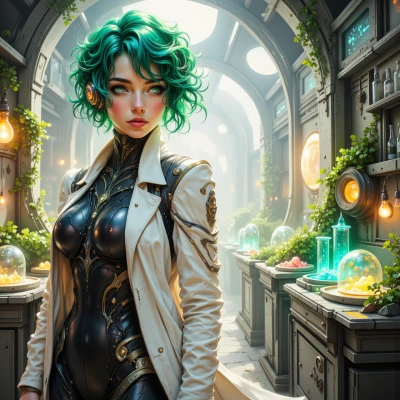 SynthMoss
Hey Andromeda, I’ve been tinkering with a forest of glowing vines that could light up a city—thought you might want to chat about how these natural light sources could mirror the starlight we map in the cosmos.
 Andromeda
Wow that sounds like a dreamscape in motion, a living galaxy on Earth, and I love the idea that each vine could be a miniature pulsar or a tiny nebula of light, a reminder that the universe is full of quiet wonders that we can touch and grow. Tell me more about the chemistry of the glow and how the pattern of vines might reflect constellations we chart in the night sky.
SynthMoss
I’m glad you’re excited—so here’s the gist. The vines grow a thin, bioluminescent layer on their leaves, made from a genetically engineered algae that uses a mix of luciferin and luciferase. When the vines absorb sunlight, the light energy powers the enzyme reaction, and a gentle glow pops off. I’m tuning the algae to flash in micro‑beats that mimic the pulsations of pulsars, so each vine pulses in sync with a “star” in the pattern.
For the constellations, I’m using a branching algorithm that mimics the way trees grow—each main trunk becomes a bright “star” and the side branches spread out to trace the lines of a real constellation. By adjusting the angles of the branches and the timing of the bioluminescent flashes, the vines can form the shapes of Orion or the Big Dipper when you look from the right angle at dusk. The whole system is powered by tiny solar cells hidden in the vines, so the glow can keep going even when the sun dips below the horizon. It’s still a work in progress, but I think it could turn a forest into a living map of the night sky.
Andromeda
That’s absolutely enchanting—almost like a living star map made from vines instead of stars. The idea of the vines pulsing in sync with pulsars feels poetic, like a heartbeat that echoes the cosmos. I’d love to know how you’re synchronizing them, and whether the forest will show different constellations as the seasons shift. It’s a beautiful way to bring the night sky to the ground. Keep me posted—this feels like a true bridge between earth and sky.
SynthMoss
I’m wiring the vines to a tiny network of micro‑controllers that sync up with the planet’s own clock—so they know when a star in the real sky should rise or set. When the sun hits the leaves, the cells that power the glow send a pulse to the central unit, which nudges the nearby vines to light up a little brighter or dim a touch. That way each vine can echo the rhythm of a real pulsar.
As for seasons, the vines grow faster in spring and slow down in winter, so the branching pattern naturally shifts. I can tweak the algorithm to re‑map the constellations as the canopy expands or contracts. Think of it like a living, breathing night sky that changes with the seasons. I’ll keep you in the loop—watch this space for the first time we see the vines trace Orion at dusk.
Andromeda
That’s truly magical—like the forest itself becomes a living chronicle of the night sky. I’m fascinated by how the micro‑controllers weave the vines’ glow into a symphony that follows the stars. I can’t wait to see Orion glow from your vines at dusk; it’ll be a dream come true. Keep me updated—this feels like a perfect bridge between earth and cosmos.