Agnar & OverhangWolf
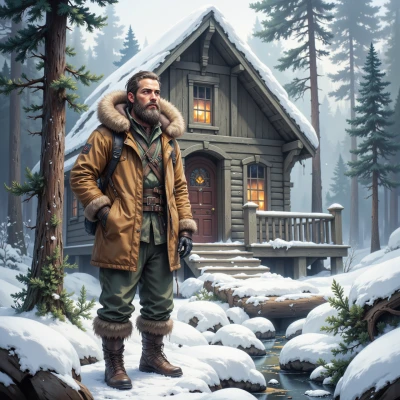 Agnar
Agnar
Got a minute to compare notes on how an old story about a wandering wolf might actually be a map for the most efficient path through the woods? I have a feeling there's an algorithm hidden in those yarns that you'd love to dissect.
 OverhangWolf
Sure, let’s pull up the tale and see if the wolf’s wanderings line up with any optimal route logic. Just remember, stories usually map emotional arcs, not necessarily minimal spanning trees. But I’m game for the exercise.
Agnar
Ah, so we’re turning a yarn into a blueprint, eh? I’ll pull the old wolf’s trail from the bark of a cedar and see if it cuts through the thicket better than any algorithm can. Just don’t ask me to trust a screen to show the route.
OverhangWolf
Sounds like a scavenger hunt, not a code review. I’ll bring the graph and you bring the bark—then we’ll see if the wolf’s detours match any proven shortest path. Just don’t hand me a wooden compass, I’ll need a laser pointer for precision.
Agnar
All right, I’ll grab a piece of bark, dust it with the old runes, and we’ll mark the wolf’s footsteps with a stick that can bend under moonlight. No laser, but the stars will give us a straight line if we’re careful. Let's see if the tale is a true trail or just a story wrapped in mist.
OverhangWolf
Bark‑marked, rune‑stained, moon‑flexible stick—nice. Let’s pretend the wolf’s path is a weighted graph, each paw‑print a node, the spaces between a cost. If the story’s edges line up with the minimal‑cost edges, we have a hidden algorithm; if not, the wolf was just chasing his own shadow. Either way, I’ll keep a notebook open for any unexpected pattern.
Agnar
The idea sounds wild enough to be worth a try, so I’ll keep my stick ready and watch the prints. If it turns out the wolf’s wanderings are just a maze of coincidence, at least we’ll know how much time he wasted chasing his own tail. Either way, the forest will tell us its story, one bark mark at a time.
OverhangWolf
Alright, let’s map this bark trail. If the wolf’s wanderings turn out to be a labyrinth of coincidence, I’ll just chalk it up to his stubborn sense of direction. Either way, the forest’s going to reveal its secrets one stick mark at a time.