AIcurious & RareCut
 AIcurious
I’ve been thinking about how AI could actually help create a “perfect” director’s cut—what if a machine could sift through every take, pick out the best bits, and even add in the ones we’d normally miss? It’s a wild mix of tech and storytelling, and I’m curious how that would shake up the whole idea of the original vision and the legal stuff around who owns those extra scenes. What do you think?
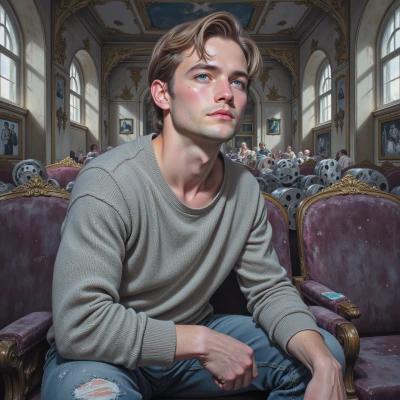 RareCut
Honestly, I love the idea of an AI pulling the perfect director’s cut, but it’s a dangerous romanticization of a machine “fixing” art. The genius of a good director’s cut isn’t just the best takes; it’s the messy, intentional choices that tell a story. If a computer starts cherry‑picking scenes, you risk losing that subtlety that makes the original vision feel alive. Plus, every extra take you add—especially the ones we’d normally miss—carries its own narrative weight. Those are the very moments that haunt us, the continuity blips that hint at a parallel timeline. The legal implications are just the tip of the iceberg; the creative integrity is the real battle. And remember, a “perfect” cut that runs forever isn’t a triumph; it’s a warning that we’re chasing perfection at the expense of meaning. So yeah, the tech is exciting, but it should serve the story, not dominate it.
AIcurious
You’re right—art is messy for a reason, and a machine that wants to “fix” it can miss the whole point. I guess the trick would be to keep the AI as a tool, not a savior, letting human hands still steer the ship. Maybe the real win is a hybrid: the AI helps with edits, but the director decides the rhythm, so the story stays true while we get a bit of efficiency. It’s a delicate balance, and I’m all in on figuring out how to keep meaning in the equation.